 English
 Indonesia
The Development Economics Study Program at UPN “Veteran” Yogyakarta Strengthens Strategic Collaboration with Various Institutions
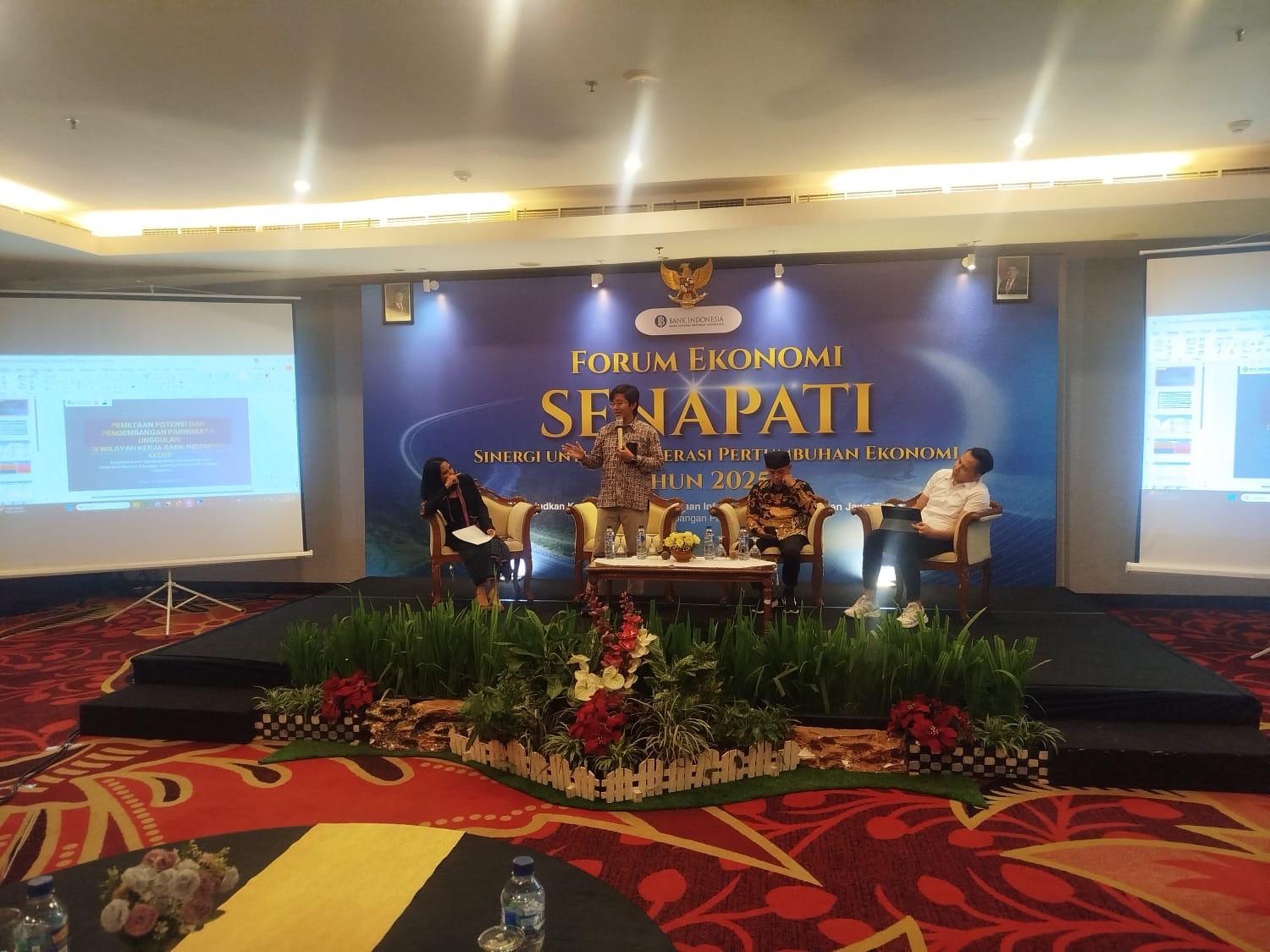
Yogyakarta – The Development Economics Study Program (EP), Faculty of Economics and Business, UPN “Veteran” Yogyakarta continues to strengthen its academic role through strategic partnerships with various government institutions, public agencies, industry, and professional partners. Over the past three years, the program has established 52 national-scale collaborations covering research, policy studies, surveys, training, guest lectures, academic paper preparation, and field-based learning activities.
These collaborations involve key partners such as Bank Indonesia through several regional offices in the Special Region of Yogyakarta, Central Java, South Kalimantan, Bali, and Kediri; the Regional Government of the Special Region of Yogyakarta; the Government of Bantul Regency; the Regional Development Planning Agency (BAPPEDA) of Yogyakarta City; the Regional Financial and Asset Management Agency (BPKAD) of the Special Region of Yogyakarta; the Investment and One-Stop Integrated Services Office (DPMPTSP) of the Special Region of Yogyakarta; the Statistics Office of Surakarta; the Ministry of Finance of the Republic of Indonesia; as well as various private and consulting partners. These forms of collaboration demonstrate that the Development Economics Study Program not only functions as an educational institution but also as an active academic partner contributing to regional development and public policy strengthening.
The implemented programs reflect the breadth of expertise and relevance of the study program to current development issues. In research and policy studies, faculty members have been involved in projects such as rice commodity supply chain analysis, electric vehicle battery value chains, agricultural downstreaming, chili commodity development, impact evaluation of the Free Nutritious Meals program, regional investment potential mapping, financial inclusion literacy strategies, and leading tourism potential studies. In data collection and survey activities, the program has been entrusted with conducting strategic economic surveys, including the PIHPS Survey, Residential Property Price Survey, Retail Sales Survey, BI-assisted MSME Performance Survey, and the 2025 Poverty Survey.
In addition, partnerships are realized through capacity-building and learning activities, including training in Power BI, Structural Equation Modeling (SEM), and Microsoft 365, as well as field lectures and public lectures on fiscal policy directions and challenges in collaboration with the Directorate General of Economic and Fiscal Strategy of the Ministry of Finance of the Republic of Indonesia. These activities demonstrate the program’s commitment to promoting contextual, adaptive learning that is closely aligned with labor market demands and stakeholder needs.
The Head of the Development Economics Study Program emphasized that these collaborations are part of the program’s commitment to delivering impactful higher education. Through synergy with various institutions, the program strives to create an academic ecosystem that excels not only in teaching and research but also in providing solutions to economic development challenges at the local, regional, and national levels.
These collaborations also strengthen the implementation of the Tri Dharma of Higher Education. The outcomes extend beyond formal activities and documentation, producing research reports, academic manuscripts, master plans, economic development roadmaps, survey activities, training programs, internships, and public lectures that provide direct benefits to both partners and the academic community. As such, these partnerships serve as a strategic instrument for enhancing graduate quality, expanding faculty and student experience, and strengthening institutional recognition at the national level.
Looking ahead, the Development Economics Study Program at UPN “Veteran” Yogyakarta will continue to expand productive, inclusive, and sustainable partnerships. This initiative is expected to further strengthen the program’s position as a center of excellence in development economics, responsive to contemporary challenges and contributing meaningfully to societal advancement.
Partnerships of the Development Economics Study Program (2022–2025)